Open-plan living has changed the way we think about home design. Without walls to naturally divide a space, we have to rely on more subtle cues to define where the kitchen ends and the living area begins, or how the dining zone connects to a workspace. One of the most effective tools for creating that visual structure is minimalist wall art. The right pieces don’t just fill blank walls – they anchor your room, guide the eye, and bring calm to what could otherwise feel chaotic. When you live in a space where everything flows together, the art you choose becomes more than decoration. It quietly organizes the room, sets a mood, and helps you feel grounded in an environment that might otherwise lack clear boundaries.
Why Minimalist Art Works in Open Spaces
Open-plan rooms can quickly become visually overwhelming. With furniture, windows, doorways, and transitions between functional zones all competing for attention, your brain has to work harder to make sense of the space. That’s where minimalist art comes in. Minimalist pieces offer clean lines and simplified forms that act as a visual filter, reducing the noise and giving your eyes a place to rest.
Research in environmental neuroscience suggests that visually simplified environments can reduce cognitive load by 32%. In practical terms, that means you feel less overwhelmed and more relaxed when your surroundings aren’t cluttered with competing details. Minimalist art works because it doesn’t add more information to process. Instead, it creates breathing room. A large abstract canvas with a soft color palette or a simple line drawing can anchor an entire wall without demanding constant attention. This is especially valuable in a room where you’re eating, working, entertaining, and relaxing all within view of each other.
Creating Visual Structure Without Physical Walls
When you don’t have walls to separate your spaces, you need art to do some of that work for you. The key is thinking about sightlines – how each piece of art relates to the others from different spots in the room. Stand at your kitchen island and look toward the living area. Sit on the couch and scan the dining wall. Walk in from the entryway. What do you see first? What pieces speak to each other?
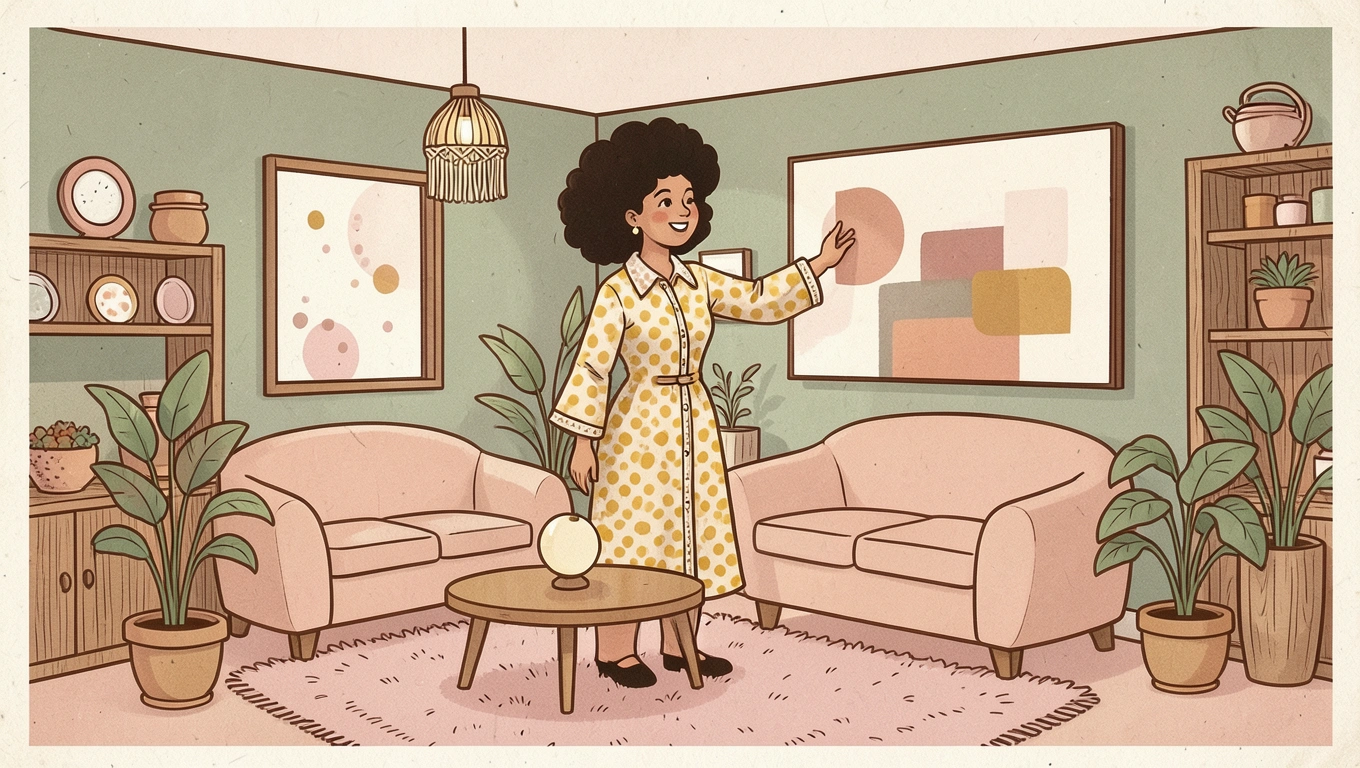
Start by identifying one primary anchor artwork. This is the piece that establishes visual priority, often the largest or most striking work in the space. It might be a large abstract painting above the sofa or a bold minimalist print in the dining area. Once you have that anchor, the other pieces should support it or help transition between zones. You’re not trying to match everything exactly – that can make the space feel flat – but you do want a sense of continuity. Maybe your anchor piece features soft grays and warm beiges, so you choose supporting works with similar tones but different compositions. This approach creates flow without making every zone look identical.
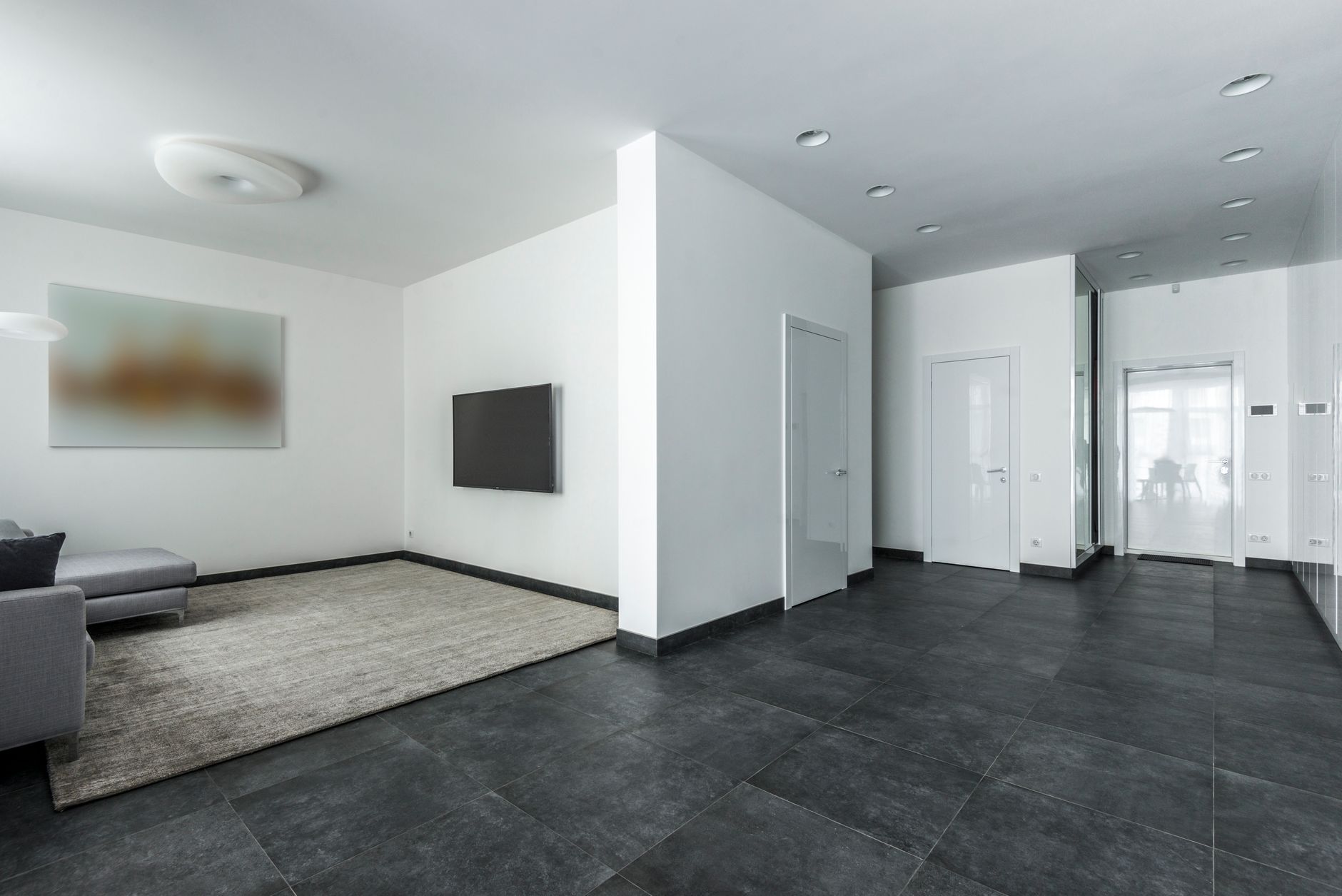
Frame consistency matters more than you might think. In an open-plan room, mismatched frames can create visual clutter that works against the calm you’re trying to build. Thin frames in black, white, natural wood, or brushed metal often work well in minimalist spaces. Avoid ornate frames – they detract from the artwork and disrupt the clean aesthetic you’re going for.
Getting the Scale Right for Large Walls
One of the biggest mistakes people make in open-plan rooms is hanging art that’s too small for the wall. When you have high ceilings or long expanses of blank space, tiny pieces just disappear. Scale is crucial. For large or tall walls, artwork should ideally be at least 48 inches on its longest side. For really substantial spaces, canvases in the 60 to 72-inch range or multi-panel sets often work better.
If you’re hanging art above furniture, there’s a helpful guideline: the artwork should span two-thirds to three-quarters of the furniture’s width. For a 90-inch couch, you’re looking at artwork around 60 to 70 inches wide. This creates visual balance and makes the furniture and art feel like they belong together rather than competing for attention. If you can’t find a single piece large enough, consider a diptych or triptych – multiple panels that work as one composition. This can be especially effective in minimalist spaces because the negative space between panels adds to the overall sense of calm.
Don’t be afraid of going bigger than feels comfortable at first. We tend to underestimate the scale we need, especially when shopping online or in a gallery where the ceilings might be much lower than ours at home. Take measurements, tape out the dimensions on your wall with painter’s tape, and live with it for a day or two before buying. You’ll get a much better sense of whether the scale feels right.
Choosing Pieces That Work Across Zones
In a traditional home, you might choose completely different art for the living room versus the dining area. In an open-plan space, you need to think about how those choices will coexist when viewed together. Abstract art is particularly well-suited for this challenge. Abstract compositions offer emotional depth and personal expression while maintaining flexibility to complement changing decor and evolving color schemes.
Abstract pieces can anchor a space, soften architectural lines, and add warmth without being too literal or theme-specific. A large abstract piece above the sofa can create an immediate focal point in the living area, while calmer abstract works with cooler tones might transition into a dining zone or home office corner. The beauty of abstract minimalist art is that it doesn’t tell you what to see – it creates a mood and lets you bring your own interpretation. This openness works well in multi-functional spaces because the art doesn’t lock you into one specific use or feeling.
When choosing pieces, think about color temperature and energy level. Warmer tones – soft terracottas, warm grays, muted golds – tend to feel inviting and work well in social zones. Cooler tones – blues, greens, soft purples – can create calm and focus, which might be better for a workspace or reading nook. You don’t need to avoid mixing warm and cool entirely, but be intentional about where each goes and how they transition.
The Quality Over Quantity Approach
Minimalism isn’t about having nothing on your walls – it’s about having the right things. In open-plan spaces especially, one or two impactful pieces will serve you better than a gallery wall of small prints. This is partly about visual weight and partly about not adding to the complexity of an already complex space. A large-scale canvas with a subtle color palette or a striking abstract composition can command attention and create structure without overwhelming the room.
This doesn’t mean you can only have two pieces of art total. It means being selective and strategic. Each piece should earn its place. Ask yourself: does this add something meaningful to the room, or am I just filling empty wall space? Does it work with the other pieces from multiple viewing angles? Does it help define a zone or create visual flow? If the answer is no, it’s okay to leave that wall empty. Negative space is a tool, not a problem to solve.
When you do add art, give it room to breathe. Don’t crowd pieces together or hang them too close to furniture, doorways, or corners. In a minimalist open-plan space, each piece should feel intentional and have its own presence. This doesn’t mean everything needs to be perfectly centered or symmetrical, but it does mean thinking carefully about placement and balance.
Ques and Ais
How high should I hang art in a room with high ceilings?
Even with high ceilings, the center of the artwork should generally be at eye level, around 57 to 60 inches from the floor. For very large pieces in tall spaces, you might go slightly higher, but keep the relationship to your furniture and sightlines in mind rather than trying to fill the full height of the wall.
Can I mix different art styles in an open-plan room?
You can, but proceed carefully. Stick to a consistent color palette and frame style even if you’re mixing abstract with photography or line drawings. The key is creating visual cohesion through shared elements rather than making everything look identical.
What if my open-plan room has awkward alcoves or angled walls?
Use those spaces intentionally. An alcove can become a mini-gallery or focal point with one carefully chosen piece. Angled walls benefit from art that plays with geometry or creates visual balance rather than fighting the architecture.
How do I light minimalist art properly?
Natural light works beautifully with minimalist pieces, but avoid direct sun that can cause fading. For artificial lighting, picture lights or adjustable track lighting can highlight key pieces without creating glare or competing with the overall ambiance of your open space.
Should I choose black and white art or add color?
Both work, depending on your space. Black and white can create striking contrast and timelessness, while subtle color can warm up a space and connect different zones. Consider what your room needs – if it’s already colorful, monochrome art might balance it; if it’s neutral, a touch of soft color can add life.
So, What We Learned?
Living in an open-plan space means rethinking how we use art. It’s not just about personal taste or finding something pretty – it’s about creating structure, managing sightlines, and building visual calm in a room that could easily feel chaotic. The minimalist approach works because it respects the complexity already present in your space. When you choose fewer, larger, more intentional pieces, you give your room a chance to breathe. You create anchors that help define zones without putting up walls. You reduce cognitive load and make the space feel more manageable.
The practical takeaway is this: start with one strong anchor piece that speaks to you and fits the scale of your space. Build from there with intention, thinking about how each addition works from different viewing angles and whether it supports the overall sense of calm you’re trying to create. Remember that empty wall space isn’t a failure – it’s part of the design. In a world that often feels cluttered and overwhelming, your home can be a place where less truly becomes more, where art doesn’t just decorate but organizes and soothes. That’s worth taking the time to get right.
This article is for general information only and is not medical advice; talk to a qualified healthcare professional about your own situation.